
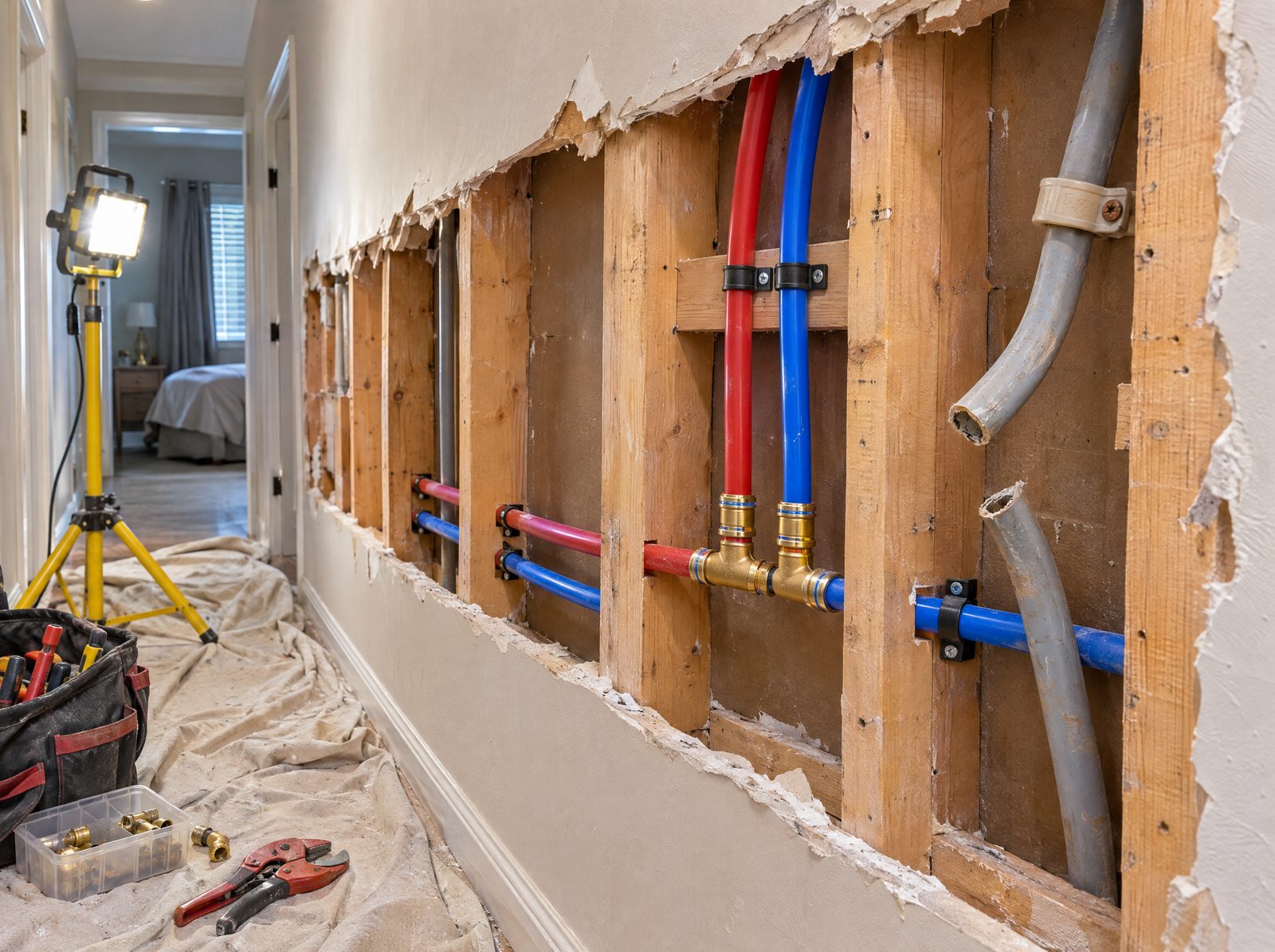
Repiping and polybutylene replacement in Rio Rancho, NM
If your water lines are flexible gray plastic, or the house springs one leak after another, the pipe itself is the problem. We find which runs are failing, replace them with PEX or copper, patch the walls, and leave you a drawing of where every new line runs.
- Polybutylene out
- PEX or copper in
- Walls patched, runs drawn
Tell us what the pipes are doing
We usually answer the same day. On hard freeze nights we keep the phone on.
Water spraying or a pipe split? Shut the main off, then call or text: 505-555-0148
What gray plastic pipe means in a 1980s house
Polybutylene was a cheap, flexible plastic water pipe, and from the late 1970s to the mid 1990s it went into millions of American homes. A 1995 settlement over its failures, Cox v. Shell, covered installations from 1978 to August 1995.
Half of Albuquerque's houses were built in 1982 or later, so a lot of the city's housing falls in that window. Not every house got it, and some that did have already been repiped. The quickest way to know is to look under the sinks and at the water heater.
If it is there, we show you the fittings, cut a piece out if you want to see it, and price replacing the runs with PEX or copper. You decide when, with the facts in front of you.
“Our 1987 house was still on gray polybutylene. They repiped it in PEX over three days, patched every hole in the drywall and left a drawing of where every new line runs.”
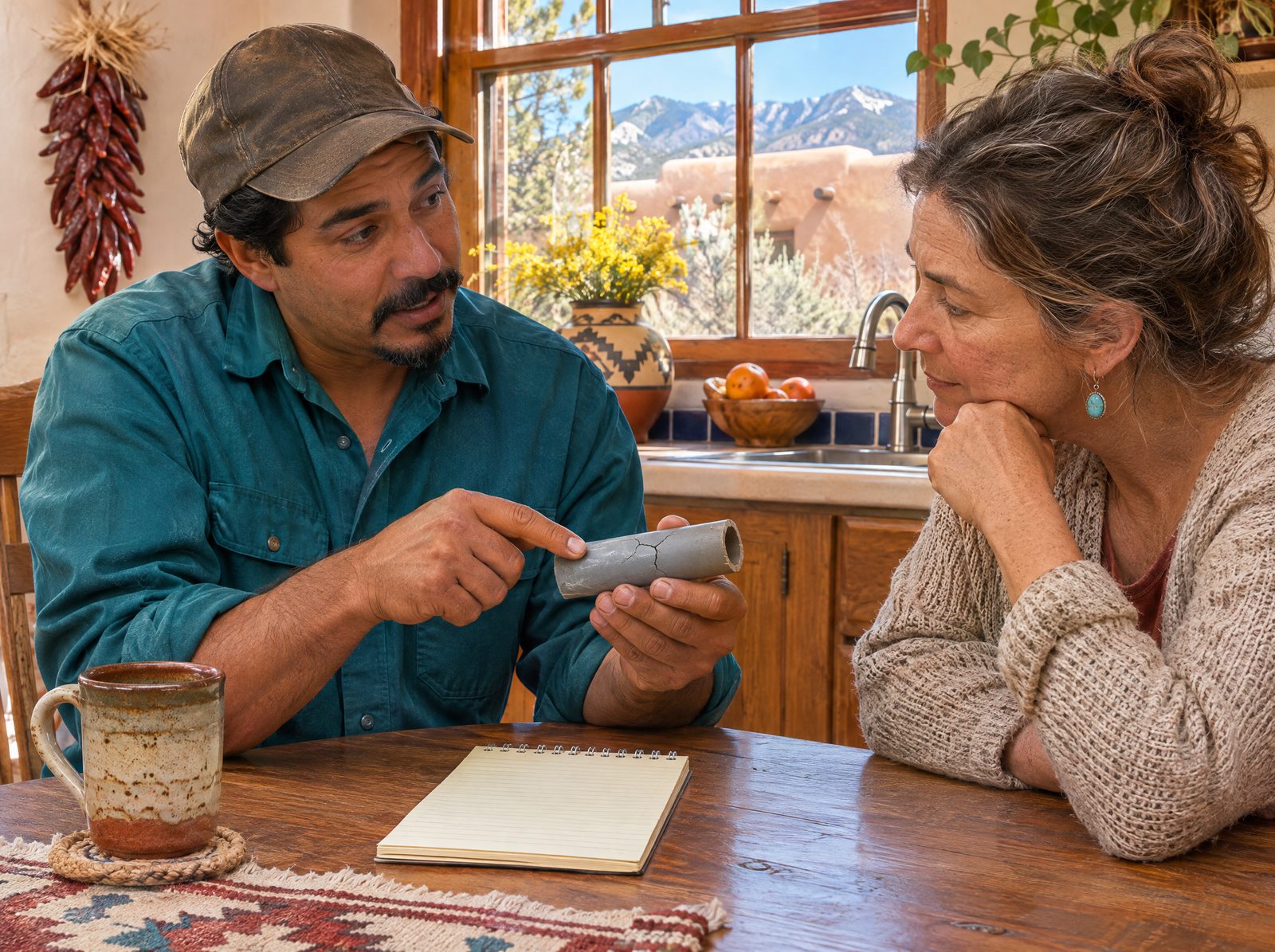
Signs the pipe itself is the problem
Any one of these can have another cause. Two together usually mean the run is due.
Gray plastic under the sinks
Flexible pipe with crimp rings, often marked PB.
A leak at a fitting
Fittings and crimp rings are where polybutylene tends to fail.
Leaks in different rooms
When one fix leads to the next, the material is the problem.
Old valves that will not close
Usually replaced during a repipe, so every shutoff works.
A house from 1978 to 1995
The years polybutylene was going into homes.
A split after a freeze
A good time to look at the rest of the run, not just the split.
Fix the section, or repipe the house?
We look before we price. This is how it usually comes out.
| What we find | Usually | Why |
|---|---|---|
| One failed fitting, otherwise copper or PEX | Repair | The rest of the system is sound |
| Polybutylene throughout | Repipe the supply | Every fitting shares the same weakness |
| Polybutylene in part of the house | Replace those runs | Mixed systems are common after past repairs |
| Leaking service line, meter to house | Replace your side | It is the owner's past the meter |
| Seized valves everywhere | Replace during the repipe | The cheapest time to change them |
How a repipe goes
Most of the house keeps working while we do it.
Walk-through and a written price.
Every run marked, the price and the dates written down before work.
Permit pulled.
With Rio Rancho, Albuquerque or, outside city limits, the state.
New lines in, old ones cut and capped.
Water off only while each run is tied in.
Inspection, walls patched, drawing left.
A sketch of where every new line runs, for you and the next plumber.
You deal with Rafael, and every run is in writing

Rafael Baca, owner and journeyman plumber
Rafael answers the phone, does the freeze checks himself and writes every price before work starts. You deal with him from the first call to the cleanup.
Book a repipe visit
We usually answer the same day. On hard freeze nights we keep the phone on.
Water spraying or a pipe split? Shut the main off, then call or text: 505-555-0148
Repiping questions we hear most
How do I know if I have polybutylene pipe?
Inside the house it is usually flexible gray or silver plastic pipe, often marked PB, joined with crimp rings at plastic or metal fittings. Look at the lines coming out of the wall under sinks and at the water heater. Buried service pipe of the same material was usually blue. If you are not sure, we can tell you on sight.
Which houses have it?
Houses plumbed from about 1978 to 1995. The 1995 class action settlement over polybutylene plumbing, Cox v. Shell, covered installations from January 1, 1978 to August 1, 1995. The median Albuquerque home was built in 1982, right in that window. See our Albuquerque page.
Why does polybutylene fail?
A legal paper on the litigation gives three explanations: the pipe and its plastic fittings break down with chlorine in the water, the crimp rings put stress on the fittings, and the material oxidizes early. In practice it fails at a fitting or splits along the pipe, often with no warning.
Is the service line from the meter mine to replace?
Usually, yes. In Rio Rancho the customer is responsible from the meter to the house, and in Albuquerque the owner is responsible beyond the meter. Rio Rancho's documented problem material is the polyethylene service line, which builders used widely and which the city is replacing with copper under its service line project; call the city about the line on its side.
Do you have to tear out the walls?
We open what we need to reach the pipe and no more, usually at fixtures and where lines cross between rooms. Openings are cut neatly and patched before we leave, furniture is covered and dust is kept to the work area.
Do I need a permit to repipe?
Yes. New Mexico plumbing work is done under the 2021 Uniform Plumbing Code as the state adopted it, and a repipe is permitted and inspected through the city or, outside city limits, the state Construction Industries Division. We pull it and book the inspection.
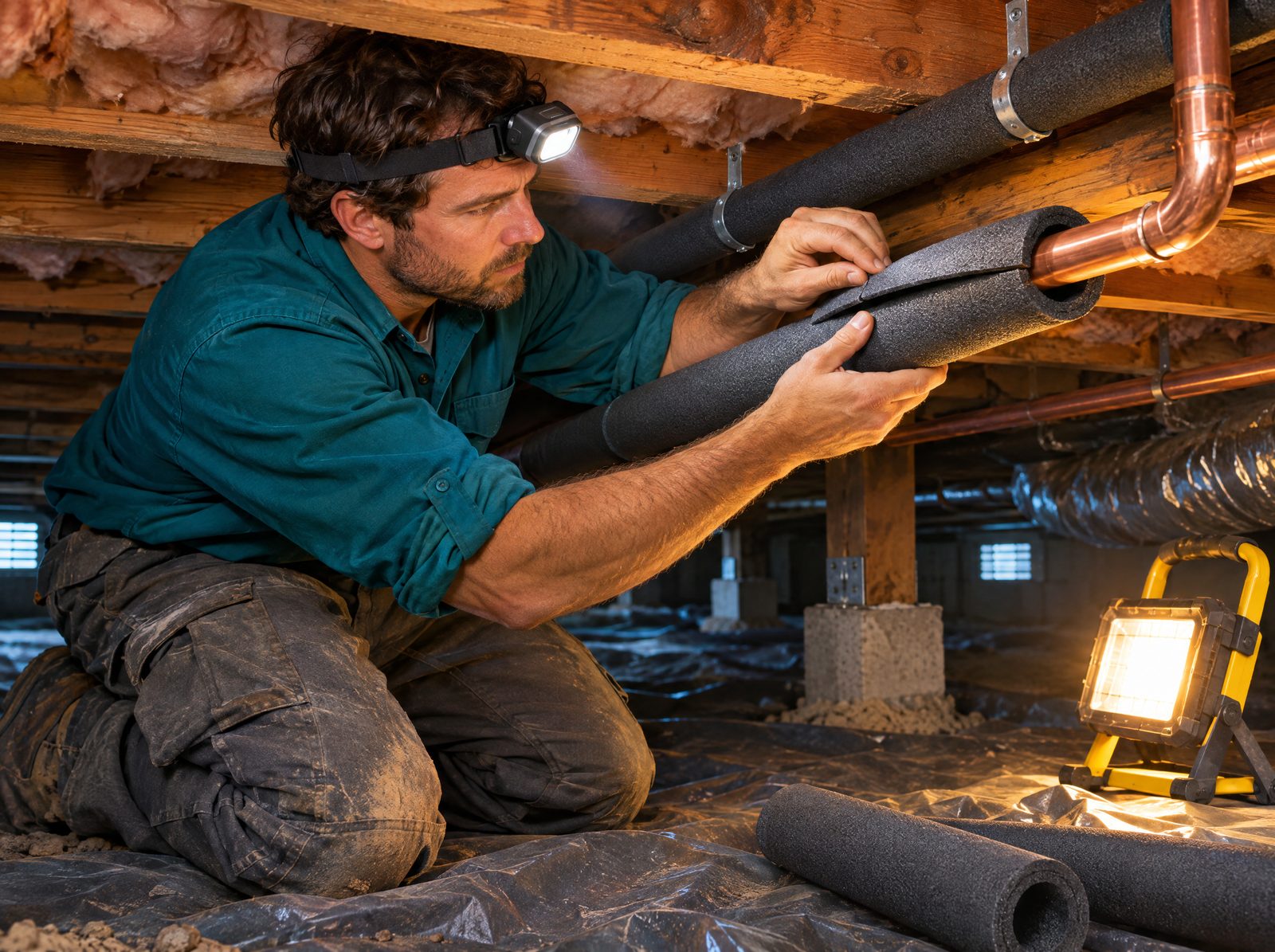
Gray plastic pipe? Tell us what the house is doing.
Tell us when the house was built, what the pipe under the sinks looks like and where it has leaked. For a single split after a cold night, see frozen pipe repair.
Book a plumber before the freeze
We usually answer the same day. On hard freeze nights we keep the phone on.
Water spraying or a pipe split? Shut the main off, then call or text: 505-555-0148